
How to Run a Blown-In Fiberglass Equipment Trial
A controlled full-bag trial can show how a material feeds, opens, and moves through a contractor's n
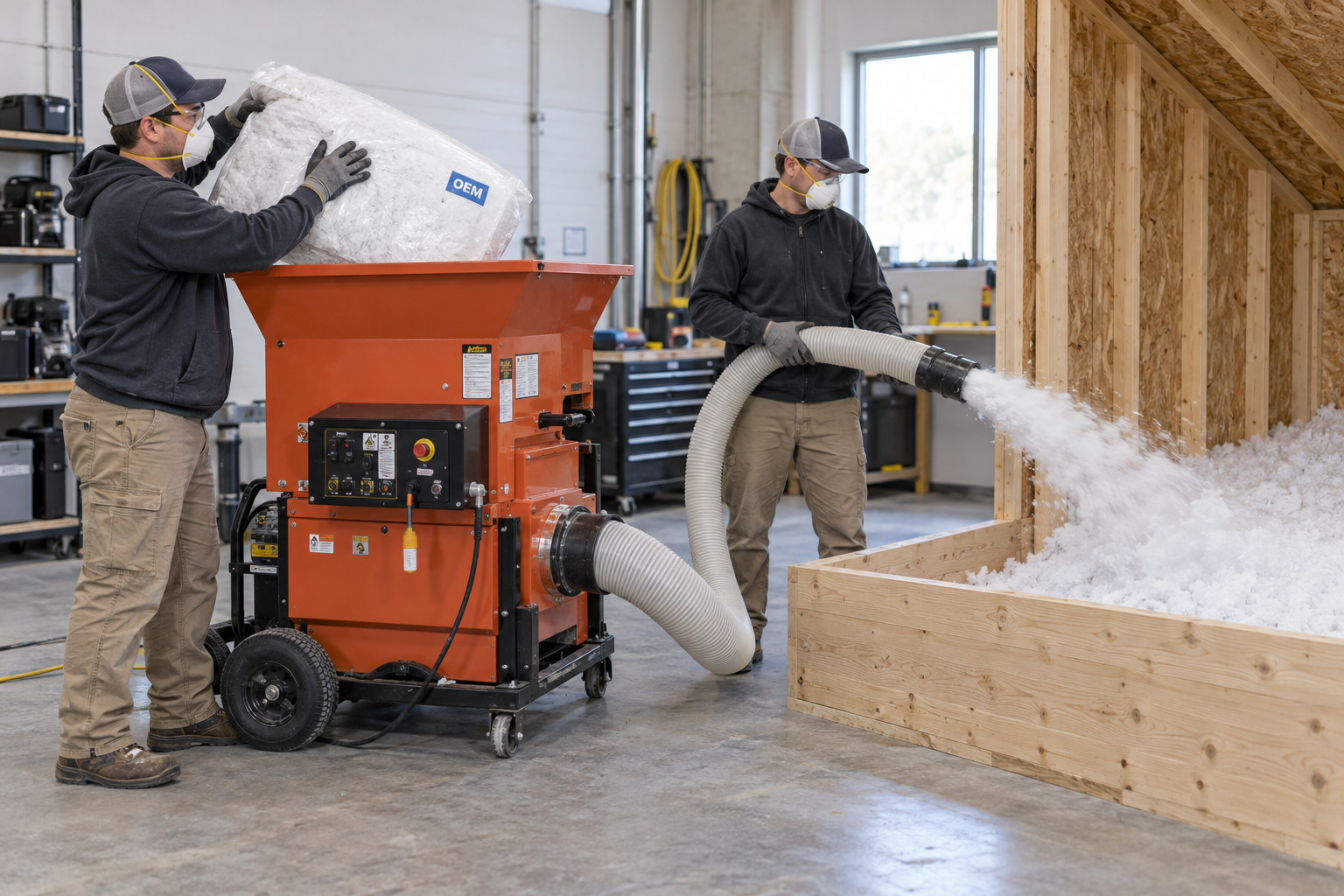
A blown-in fiberglass equipment trial should focus on one question: how does the material behave in the contractor's normal blowing system? A hand sample can show color and fiber texture, but it cannot demonstrate feeding consistency, fiber opening, or movement through the hose. Testing a complete commercial bag provides a more representative observation before a larger purchase.
The contractor should begin with a clean, serviceable machine and the hose configuration normally used in the field. Record the machine manufacturer and model, hose diameter and length, initial settings, and the weight of the packaged material. These details make the result easier to compare if another trial is conducted later.
During the run, observe how the compressed material enters the hopper and separates. Note any bridging, repeated feed interruptions, large clumps, or unusual material remaining in the machine. The operator at the hose should also record whether the flow is steady and controllable. If a setting needs adjustment, change one variable at a time so the effect can be identified.
Timing the bag from loading to discharge can provide another useful reference, but the result should be interpreted within the actual test setup. Machine condition, hose configuration, operator technique, and settings can all influence the observed feed rate. A trial on one machine should not automatically be treated as a universal result for every contractor or equipment model.
After the run, document stoppages, cleanup, visible dust conditions, remaining material, and operator comments. Photographs or short videos can help the manufacturer understand specific feeding behavior, especially when feedback describes a problem that did not occur throughout the entire test.
An equipment trial evaluates handling and machine compatibility; it does not establish thermal performance, R-value, or a commercial coverage claim. Levinson Energy can review recorded trial information with contractors and distributors while product-specific technical documentation is completed through the appropriate testing process.
Levinson Export Inquiries
Full Name*
Country / Region*
Email*
Message*


