
Why Attic Ventilation Baffles Matter Before Blown-In Fiberglass Installation
Properly positioned baffles help keep intended soffit-to-attic airflow paths open near the eaves.
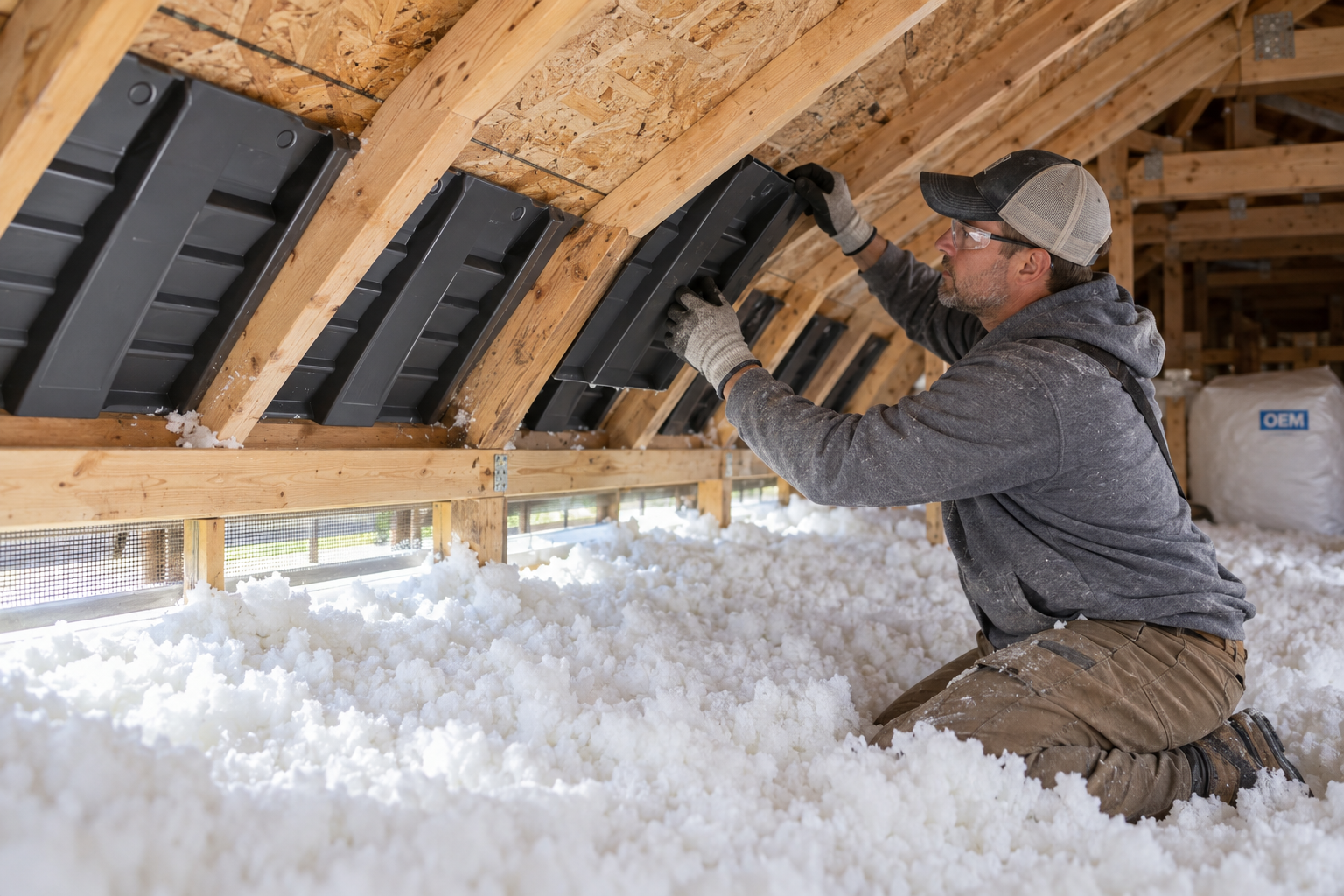
Attic ventilation baffles have a narrow but important role in a blown-in fiberglass project: they help prevent insulation from blocking the airflow path between soffit vents and the attic. This matters most near the eaves, where roof clearance is limited and the installed material can easily reach the underside of the roof deck.
Before adding insulation, the contractor should inspect the attic's existing ventilation layout. Not every attic uses the same design, so the crew should identify which soffit vents are active and confirm the required ventilation path from the project documents, local requirements, or the responsible building professional. A baffle should not be installed based only on a general assumption about the roof.
Where baffles are required, they should be placed before blowing begins and secured so normal air movement or hose activity will not dislodge them. Each baffle should create a continuous, unobstructed route from the soffit area toward the upper attic. Its upper edge should remain visible above the planned insulation level so the installer can recognize and protect the opening during application.
Hose direction deserves special attention at the perimeter. Blowing directly toward the lower end of a baffle may push fibers into the ventilation channel or shift a poorly secured component. A controlled approach allows the installer to build the insulation layer near the eaves while keeping the intended air passage clear.
The final inspection should check the baffles from several accessible positions. The crew should look for covered openings, displaced sections, compressed material at the soffits, or low insulation areas created by excessive caution. The objective is a continuous insulation layer beside the ventilation path without filling the path itself.
Ventilation baffles do not replace air sealing, moisture control, or product-specific installation instructions. They address one detail: protecting the designed airflow route at the roof perimeter. Levinson Energy recommends confirming the attic design and applicable requirements before installing blown-in fiberglass insulation near the eaves.
Levinson Export Inquiries
Full Name*
Country / Region*
Email*
Message*


