
How to Store Blown-In Fiberglass Insulation Before Installation
Keeping sealed bags dry, protected, and organized helps maintain jobsite readiness before the materi
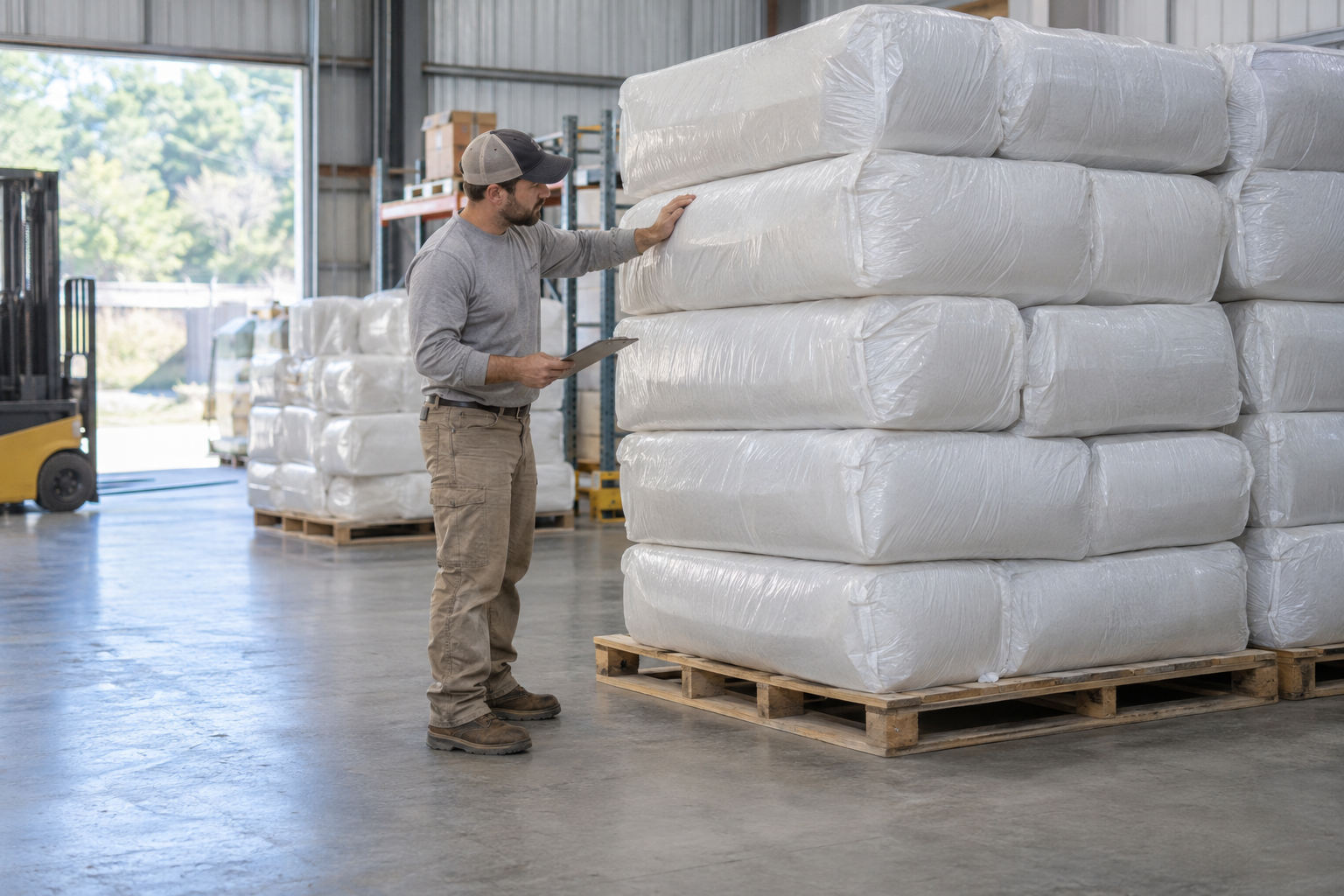
Blown-in fiberglass insulation can pass through several handling stages before installation, including unloading, warehouse storage, transport to the project, and staging near the blowing machine. Protecting the packaged material throughout these stages helps the contractor begin the job with bags that are intact, identifiable, and ready for controlled feeding.
The preferred storage location is a clean, dry, covered area protected from rain, roof leaks, standing water, and direct contact with damp surfaces. Bags should be placed on suitable pallets or another stable raised surface rather than directly on the floor. Product-specific storage instructions should always take priority, especially when temperature, humidity, or stacking conditions are addressed by the manufacturer.
Stacks should remain stable and within the limits specified for the packaging and storage system. Sharp edges, protruding fasteners, forklift contact, and repeated dragging can puncture or weaken a bag. Packages should also be kept away from open flames, heat-producing equipment, and work activities that could damage the wrapping or contaminate the material.
Receiving inspection provides a useful control point. The person accepting the shipment can record the bag count, product identification, lot information, and visible package condition. Torn, wet, or heavily compressed packages should be separated for evaluation instead of being mixed into the normal job inventory. A damaged bag should not be assumed acceptable simply because its opening can be taped closed.
At the jobsite, only the quantity needed for the planned work period should be moved into the active staging area. Keeping unopened bags clear of traffic routes reduces unnecessary handling and helps the crew maintain an orderly supply. Bags should remain sealed until the operator is ready to load them into the machine.
Storage practices do not establish thermal performance or replace product testing, but they can prevent avoidable handling problems before installation begins. Levinson Energy recommends documenting package condition, protecting bags from moisture and physical damage, and following the storage instructions supplied for the specific blown-in fiberglass product.
Levinson Export Inquiries
Full Name*
Country / Region*
Email*
Message*


