
Why Recessed Light Preparation Matters Before Blown-In Fiberglass Installation
Checking fixture ratings and required clearances helps contractors avoid unsafe or incomplete attic
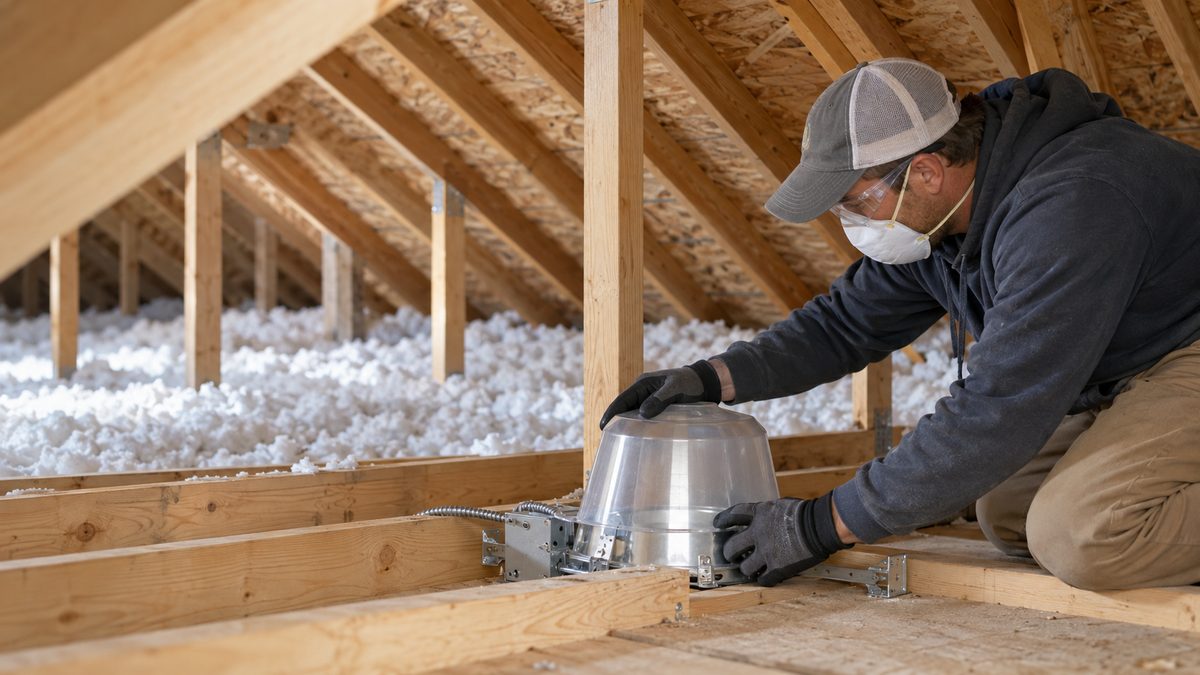
Before blown-in fiberglass insulation is added to an attic, every recessed light fixture in the work area should be identified and checked. Once the insulation layer covers the attic floor, fixture housings, wiring connections, and labels may be harder to see. Preparing these locations first helps the crew install the material without burying a condition that still needs attention.
The first step is to determine whether each fixture is approved for contact with insulation. An IC-rated fixture may be designed to operate while touching insulation, but the installer should still follow the fixture manufacturer's instructions and applicable electrical and building requirements. A non-IC-rated fixture normally requires a specified clearance from insulation and other materials. The clearance should not be guessed or replaced with an improvised cover.
If a protective enclosure or barrier is required, it should be a suitable system installed before the blowing work begins. The barrier must remain stable, preserve the required clearance, and allow the blown-in fiberglass insulation to be distributed evenly around the protected area. Cardboard boxes, loose plastic, or other temporary materials should not be used as substitutes for an approved solution.
The crew should also inspect the area around the fixture for damaged components, open penetrations, and loose wiring. Any electrical repair should be completed by a qualified person. Air-sealing work around approved components should be finished before the blown-in fiberglass insulation is installed, using materials and methods permitted for the assembly.
During installation, the operator should keep the hose under control and avoid directing a concentrated stream against fixture barriers. After the attic is filled, the crew should confirm that required clearances remain visible and that the blown-in fiberglass insulation depth is reasonably uniform around each protected location.
This preparation does not replace product instructions, electrical codes, or local inspection requirements. It creates a better starting point for a controlled blown-in fiberglass insulation installation. Levinson Energy supplies 33 lb / 15 kg blown-in fiberglass insulation for contractor evaluation, distribution, OEM packaging, and private-label cooperation.
Levinson Export Inquiries
Full Name*
Country / Region*
Email*
Message*


