
How to Inspect Blown-In Fiberglass Insulation Bags at Delivery
A consistent receiving check helps importers, distributors, and contractors document quantity, packa
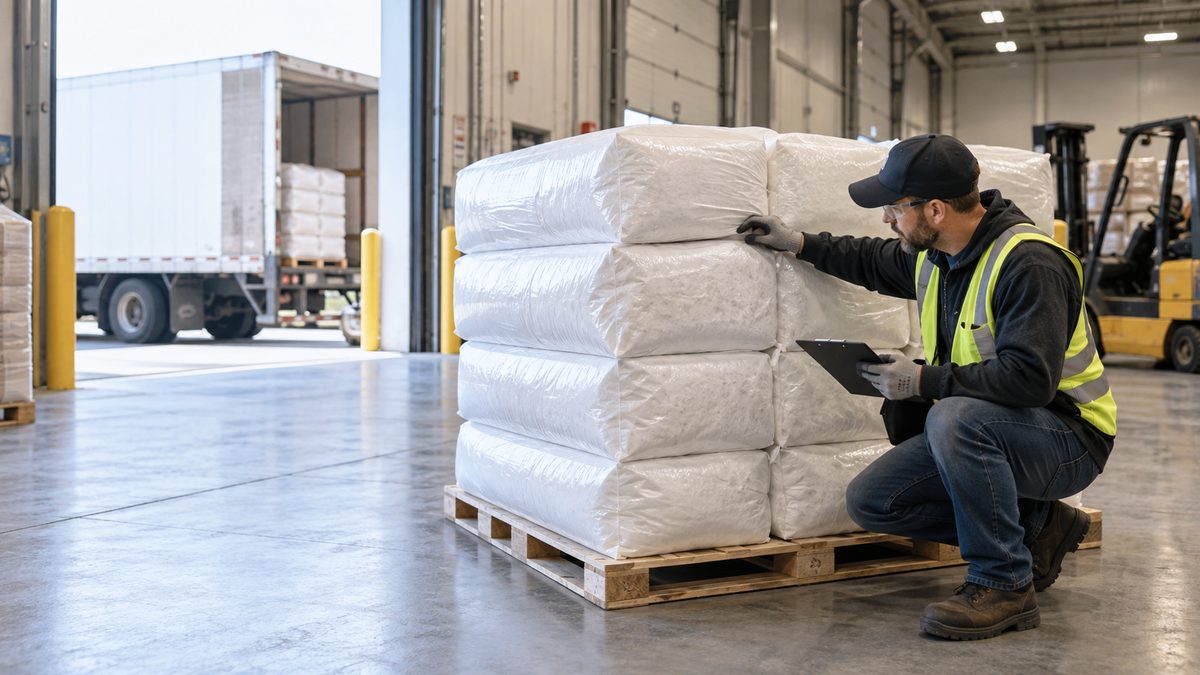
Receiving inspection is one of the simplest ways to improve material control. When blown-in fiberglass insulation arrives at a warehouse or project, the shipment should be checked before the bags enter normal inventory or jobsite use. A short, consistent review can identify quantity differences and visible packaging problems while the delivery condition is still easy to document.
Start by comparing the shipment with the packing list and purchase order. Each blown-in fiberglass insulation bag should match the product description, nominal bag weight, and labeling expected for the order. Levinson Energy's standard package is 33 lb / 15 kg. For OEM or private-label orders, the buyer should also confirm that the approved outer packaging and product identification are consistent across the shipment.
Inspect the sealed edges, corners, and broad surfaces of the bags. Look for punctures, tears, open seams, severe deformation, or signs of moisture exposure. Check bags on the top, sides, and lower layers of each pallet rather than judging the entire load from one visible face. Blown-in fiberglass insulation may pass through several handling stages before delivery, so damage can appear in more than one location.
The pallet and surrounding cargo area also provide useful information. Leaning stacks, broken pallet boards, wet flooring, damaged stretch wrap, or evidence of cargo movement may indicate a handling problem. If a discrepancy is found, take clear photographs before the affected material is moved and record the bag count and visible condition.
Questionable blown-in fiberglass insulation bags should be separated from accepted stock until they are evaluated. A torn bag should not automatically be returned to inventory simply because the opening can be taped. The decision should follow product-specific instructions, supplier communication, and the receiving company's quality and safety procedures.
A receiving inspection does not establish thermal performance or replace product testing, but it supports traceability and controlled handling. For importers, distributors, and contractors, documenting bag count, package condition, product identity, and available batch information creates a useful shipment record. Levinson Energy supplies 33 lb / 15 kg blown-in fiberglass insulation and supports OEM packaging and private-label cooperation.
Levinson Export Inquiries
Full Name*
Country / Region*
Email*
Message*


