
Why Air Sealing Comes Before Blown-In Fiberglass Insulation
Preparing the attic air barrier first gives contractors clear access to leakage paths before the ins
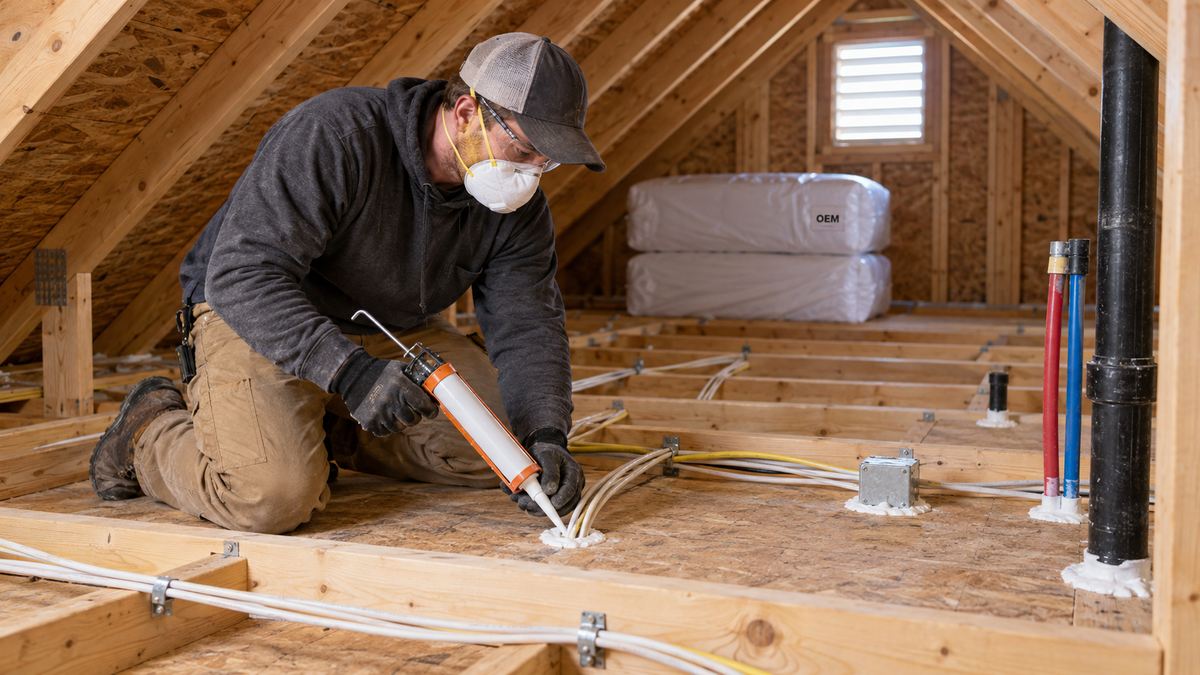
Air sealing should be completed before blown-in fiberglass insulation is installed on an attic floor. The insulation and the air barrier perform different jobs: insulation slows heat transfer, while air sealing limits uncontrolled air movement through gaps in the ceiling plane. Once the attic is covered, many penetrations become harder to locate and reach.
Begin with an attic-floor inspection before the blowing machine is set up. Common leakage paths may occur around wiring penetrations, plumbing openings, top plates, duct chases, access hatches, and other transitions between conditioned and unconditioned space. The crew should identify which locations are safe and appropriate to seal under the project plan and applicable local requirements.
The sealing material must suit the size, location, surface, and temperature conditions of the opening. Areas near chimneys, flues, recessed lights, exhaust components, or other heat-producing equipment require particular care. Clearance and fire-safety rules should be confirmed before work begins, and uncertain conditions should be reviewed by a qualified professional. Blown-in fiberglass insulation should never be used as a substitute for an approved air-sealing or fire-blocking material.
After sealing, inspect the work before installing insulation. Verify that sealant is continuous where specified, larger openings have been closed with suitable rigid materials, and required ventilation paths remain unobstructed. Photographs taken at this stage create a useful record because the finished blown-in fiberglass insulation layer will later hide much of the attic floor.
Completing air sealing first also supports a cleaner installation sequence. The crew can work directly at the ceiling plane without moving newly installed fibers, and the installer can distribute blown-in fiberglass insulation over a prepared surface. This reduces avoidable rework and helps preserve the intended uniform layer.
For contractors, distributors, and project buyers evaluating a complete attic system, product supply should be coordinated with the preparation schedule. Levinson Energy supplies 33 lb / 15 kg bags of blown-in fiberglass insulation and supports bulk orders, OEM packaging, and private-label cooperation. Product-specific performance claims should rely on completed testing and documentation.
Levinson Export Inquiries
Full Name*
Country / Region*
Email*
Message*


