
How Blown-In Fiberglass Insulation Works in an Attic
Understand the thermal role, quantity calculation, installation controls, and purchasing information
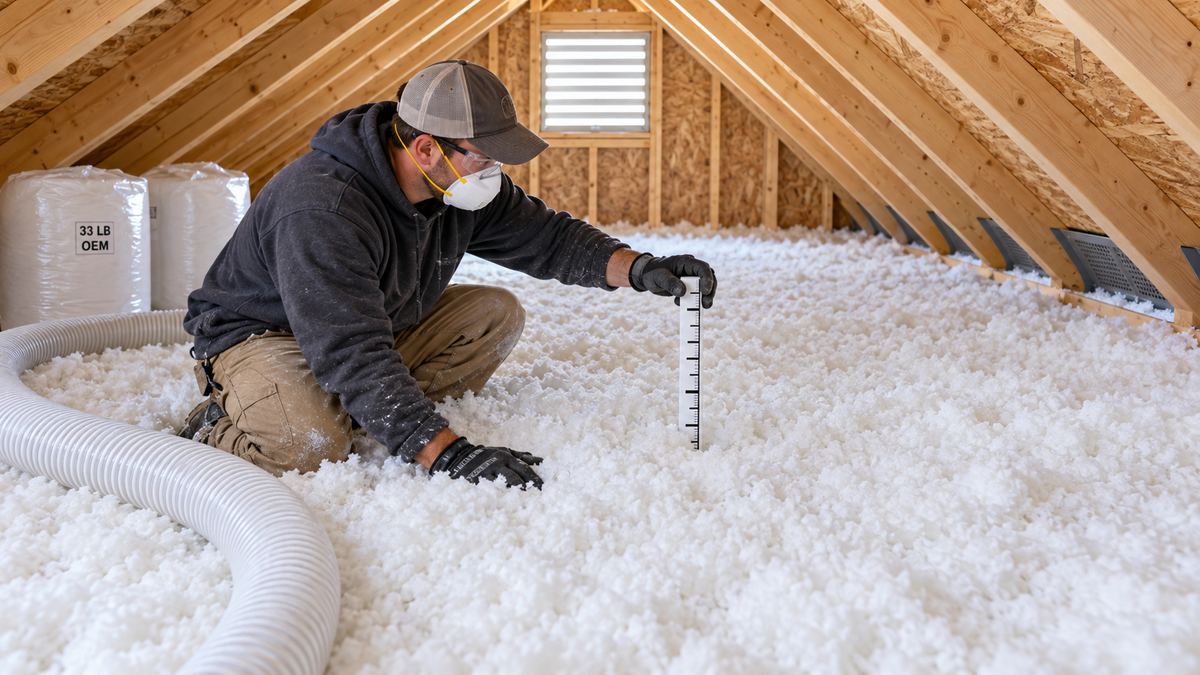
Blownin fiberglass insulation is used on attic floors to create a continuous thermal layer between the conditioned rooms below and the unconditioned roof space above. The material reduces heat flow through the ceiling assembly, helping the building maintain indoor conditions more consistently. Because loose fibers can be distributed around joists, wiring, braces, and irregular spaces, the installer can cover areas that are difficult to fit with pre-cut insulation.
The important product is not simply a compressed bag; it is the installed layer created after the material passes through the blowing machine. For blown-in fiberglass insulation to perform as intended, the attic should first be inspected for air leaks, blocked ventilation paths, unsafe heat-producing components, and openings that require dams or barriers. These preparation items support the main objective: a continuous layer at the depth and density specified for the selected product.
The required quantity should be calculated from three project inputs: the insulated attic area, the target R-value, and the tested coverage chart for the exact product. A valid blown-in fiberglass insulation coverage chart connects the target R-value with minimum installed thickness, settled thickness where applicable, required bag count, and maximum area per bag. Contractors should not estimate solely from bag weight or a generic online calculator because products can install at different densities.
Once a product-specific chart is available, the estimator can divide the attic into measured sections and exclude areas that are not part of the insulated ceiling plane. The basic calculation is required bags = insulated area divided by tested coverage per bag at the selected R-value, rounded up according to project practice. During installation, depth markers reveal thin areas, while bag-count records confirm that the planned quantity of blown-in fiberglass insulation entered the attic. Neither check should be used in isolation.
For contractors, the practical advantages of blown-in fiberglass insulation include efficient machine installation and the ability to form an even layer across complex attic geometry. The material can also be useful when adding insulation over an existing compatible layer, provided the attic condition, ventilation, electrical components, and project requirements have been evaluated. These advantages depend on controlled installation; simply adding more material does not correct moisture, ventilation, or safety problems.
For importers and distributors, useful purchasing information therefore includes more than the price per bag. Buyers should review package weight and dimensions, product identification, machine compatibility, test documentation, and the final R-value and coverage chart. Levinson Energy supplies 33 lb / 15 kg blown-in fiberglass insulation in 85 x 55 x 25 cm bags and supports bulk orders, OEM packaging, and private-label cooperation. Product-specific R-value and coverage claims should be published only after the applicable testing is complete.
Levinson Export Inquiries
Full Name*
Country / Region*
Email*
Message*


