
What Is Blown-In Fiberglass Insulation and How Is It Used
A practical introduction to the material, installation method, common applications, advantages, and
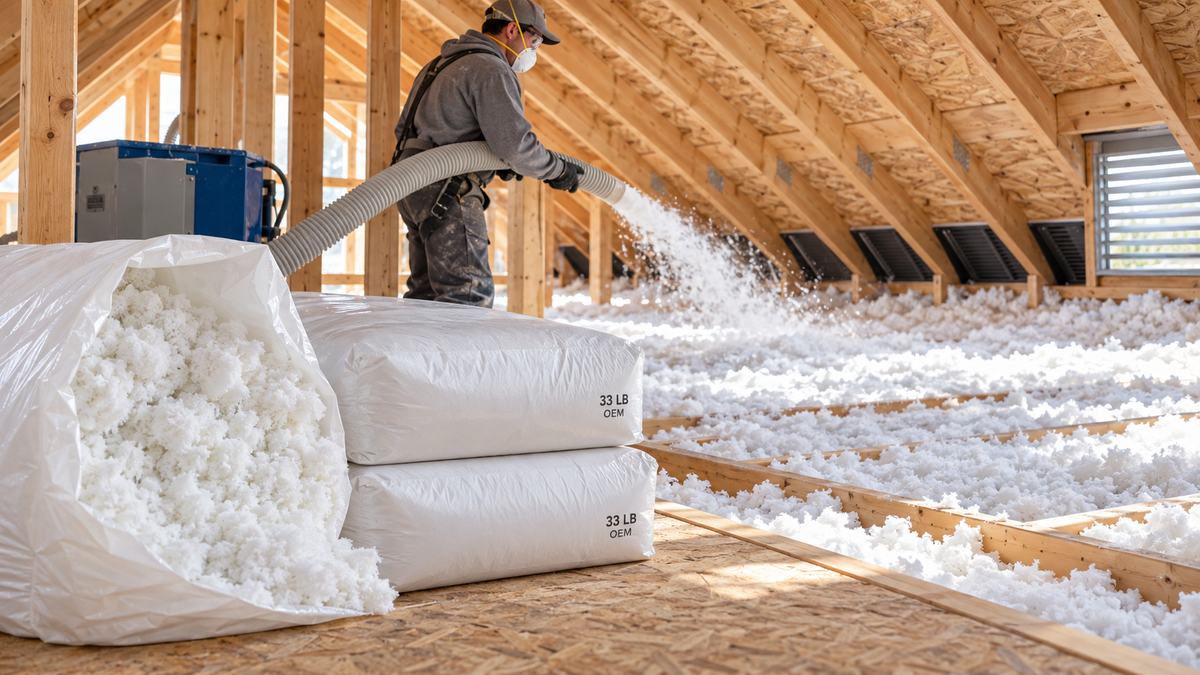
Blown-in fiberglass insulation is a bagged thermal insulation material made from fine glass fibers. Before installation, the material is compressed for efficient storage and transport. At the jobsite, a blowing machine separates and fluffs the fibers, then carries them through a hose to the installation area. The finished product is therefore not the compressed material inside the bag; it is the controlled fiber layer created after blowing.
In open attic applications, blown-in fiberglass insulation is distributed across the ceiling plane and around joists, wiring, braces, and other irregular features. This ability to conform to complex geometry helps the installer create continuous coverage where pre-cut materials may require more fitting. In suitable enclosed cavities, specialized installation methods may also be used, but the product, equipment settings, installed density, and project design must be compatible.
The material is commonly considered for new construction, attic upgrades, and retrofit projects. Practical advantages include machine-assisted placement over large areas, flexible coverage around obstructions, and compact bagged handling before use. Blown-in fiberglass insulation can also help limit gaps within the intended insulation layer when it is installed evenly. These advantages still depend on good jobsite control: thin areas, blocked ventilation paths, or incorrect density can reduce the quality of the completed work.
Project quantity is not determined by bag weight alone. Contractors first identify the insulated area and target R-value, then use the tested coverage chart for the exact blown-in fiberglass insulation product. That chart should connect the target R-value with required thickness, installed density or bag count, and maximum coverage per bag. Depth markers and actual bag consumption provide complementary checks during installation.
For distributors and importers, product evaluation should extend beyond visual appearance. Feeding behavior, fiber consistency, dust during installation, recovery after compression, hose flow, installed density, coverage, packaging strength, machine compatibility, and test documentation all affect commercial suitability. A controlled sample trial can help buyers compare blown-in fiberglass insulation with their own equipment and under representative jobsite conditions before placing a larger order.
Levinson Energy manufactures 33 lb / 15 kg bags of blown-in fiberglass insulation in an 85 x 55 x 25 cm package. The company supports bulk orders, OEM packaging, private-label cooperation, and export supply for contractors, distributors, and importers. Buyers can discuss packaging and trial requirements with the supplier, while product-specific R-value, coverage, or compliance claims should be published only after the applicable testing and documentation are complete.
Levinson Export Inquiries
Full Name*
Country / Region*
Email*
Message*


