
How Blown-In Fiberglass Insulation Reduces Heat Transfer
Understand how blown-in fiberglass insulation uses an airy fiber structure to resist heat flow and s
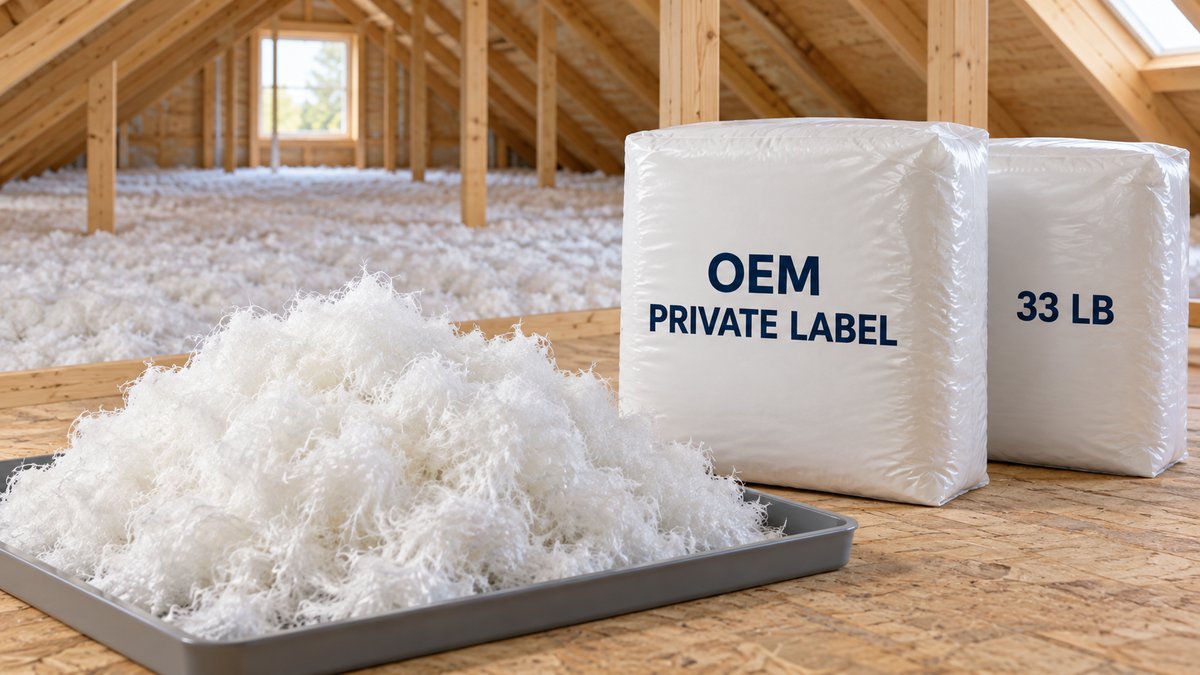
Blown-in fiberglass insulation slows heat transfer through the insulated parts of a building. Heat naturally moves from warmer areas toward cooler areas: outward from heated rooms in winter and inward toward cooled rooms in summer. By adding resistance along that path, insulation helps the building maintain indoor temperatures with less heating or cooling demand than the same assembly without adequate insulation.
The material consists of fine glass fibers arranged in an open network. The spaces between those fibers hold air, and the fiber structure limits its movement within the insulation layer. Relatively still air conducts heat poorly. This combination of fibers and air gives blown-in fiberglass insulation its thermal resistance; the material does not need to generate heat or actively cool the building.
Also known as loose-fill fiberglass insulation, the product is supplied in compressed bags and expanded using a blowing machine. The hose delivers fibers around framing and other irregular features. When distributed to the specified depth and coverage, blown fiberglass insulation forms a layer across the intended area, reducing the gaps that would otherwise provide easier paths for heat transfer.
In a vented attic, blown-in fiberglass insulation is commonly placed on the attic floor, above the ceiling of the occupied rooms. During cold weather, this layer reduces heat loss into the colder attic. During hot weather, it reduces heat gain from the warmer attic into the rooms below. Its role is to improve separation between conditioned rooms and the unconditioned attic, rather than make both spaces the same temperature.
Thermal resistance is expressed as R-value. For a particular product, the achieved R-value depends on its installed thickness, density, and material characteristics. Blown-in fiberglass insulation should therefore be specified using the product's tested coverage information. A deeper-looking layer alone does not establish its performance, and package weight does not describe the thermal resistance of the finished installation.
Insulation and air sealing contribute in different ways. Insulation resists heat flowing through the assembly, while an air barrier limits air moving through leaks. Used together in a suitable building design, they support a more effective thermal boundary. Actual energy savings depend on climate, existing insulation, building condition, heating and cooling equipment, and occupant use.
Levinson Energy manufactures blown-in fiberglass insulation in 33 lb / 15 kg bags measuring 85 x 55 x 25 cm. As a China-based fiberglass insulation supplier, the company supports bulk supply, OEM packaging, and private-label cooperation for contractors, distributors, and importers seeking a dedicated source of this insulation material.
Levinson Export Inquiries
Full Name*
Country / Region*
Email*
Message*


