
Understanding R-Value in Blown-In Fiberglass Insulation
Learn how R-value relates to the thickness, density, and coverage of blown-in fiberglass insulation.
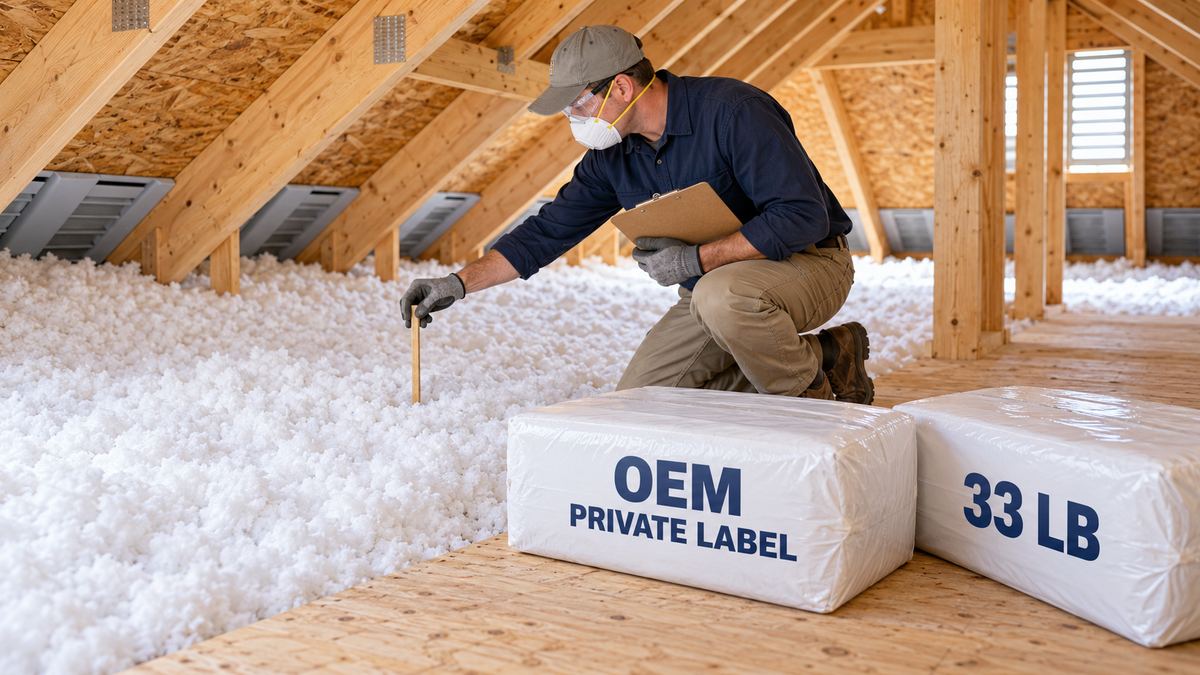
R-value describes resistance to heat flow. A higher R-value means greater thermal resistance under the stated conditions. For blown-in fiberglass insulation, it describes the performance of a specified installed layer. R-30 and R-49, for example, represent different thermal resistance levels; they are not bag sizes or universal depth measurements.
The material is also called loose-fill fiberglass insulation or blown fiberglass insulation. It is supplied in compressed bags, then opened and distributed using blowing equipment. Fine fibers form a structure containing air spaces that help resist heat transfer. The thermal performance belongs to this installed structure, rather than to the compressed package before use.
Thickness matters because heat must travel through the insulation layer. For a given product, increasing installed thickness generally increases thermal resistance when the material is installed as specified. However, blown-in fiberglass insulation does not have one universal R-value per inch. The relationship between depth and thermal resistance must come from data for the particular product and installation conditions.
Density describes how much material occupies a given volume. Two layers can look equally deep while containing different amounts of fiber. Density affects thermal performance, so depth alone cannot establish the R-value of blown-in fiberglass insulation. The intended combination of thickness and material quantity should match the conditions represented by the manufacturer's tested coverage information.
A coverage chart brings these factors together. For each listed R-value, it identifies the required thickness and material quantity, such as maximum coverage per bag and minimum bags for a stated area. Select the target row, then use the measured project area to calculate the required bags. Where initial and settled thicknesses are listed separately, use each figure for its stated purpose.
For contractors and buyers, this makes R-value a useful link between a project specification and material purchasing. Compare blown-in fiberglass insulation at the same target R-value and intended application, using its documented coverage. The insulation layer's rating also differs from the performance of the complete ceiling or wall, where framing and other heat-flow paths affect the result.
Levinson Energy is a China-based manufacturer supplying blown-in fiberglass insulation in 33 lb / 15 kg bags measuring 85 x 55 x 25 cm. The company supports bulk supply, OEM packaging, and private-label cooperation. Contractors, distributors, and importers can discuss their intended application and request the available product documentation when evaluating supply options.
Levinson Export Inquiries
Full Name*
Country / Region*
Email*
Message*


