
Why Blown-In Fiberglass Insulation Suits Complex Attic Layouts
How loose-fill fibers adapt to roof framing and irregular spaces to support effective attic coverage
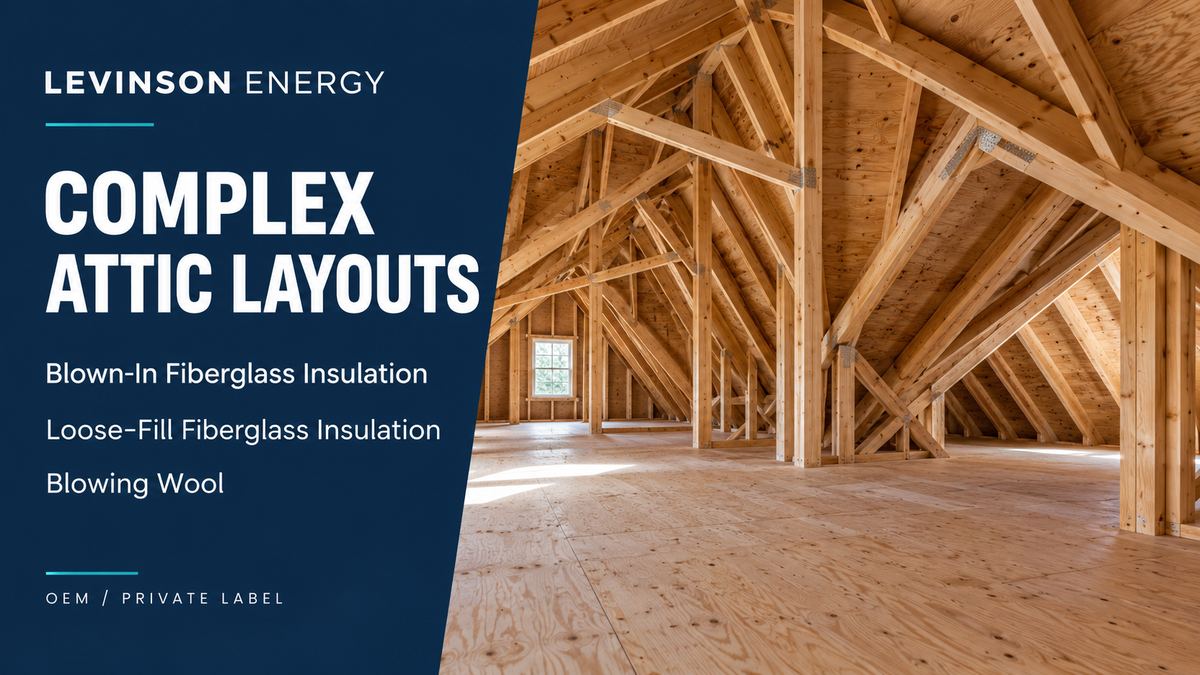
Blown-in fiberglass insulation is a practical option for vented attics with complicated framing, intersecting roof sections, and spaces that are difficult to reach. Its main advantage is adaptability: loose fibers can be distributed around obstacles and across irregular areas, helping contractors build a consistent insulation layer above the occupied rooms.
An attic rarely consists of one clear rectangle. Truss webs, bracing, changes in ceiling height, and service routes divide the space into different shapes. Preformed insulation pieces may require repeated measuring and cutting in these areas. Loose-fill fiberglass insulation is delivered through a hose, allowing the installer to direct material into the intended areas without shaping every piece by hand.
This flexibility is especially useful around framing intersections. Blown-in fiberglass insulation can extend between and over ceiling joists where the assembly permits, covering areas that would otherwise need several fitted pieces. The purpose is to limit thin or missed sections in the thermal layer. The fibers do not remove thermal bridges through structural members, but appropriate coverage can improve the overall insulation arrangement.
Coverage matters because heat can pass more readily through underinsulated areas. In a vented attic, the insulation layer at ceiling level helps slow heat transfer between the living space and the unconditioned attic. Blown fiberglass insulation therefore combines a useful installation format with a clear building function: adding thermal resistance above the rooms below.
The same approach can suit an attic extension with multiple roof sections or an older house with uneven framing spacing. A hose can deliver material beyond the immediate access opening, although installers still need access and visibility to confirm coverage. Blown-in fiberglass insulation should remain within its intended boundaries, with ventilation routes and required clearances maintained.
Adaptability alone does not determine thermal performance. The selected product must have documented installation thickness, coverage, and material requirements for the target R-value. These figures allow contractors to translate a complex attic layout into an actual material plan. Insulation also works alongside air sealing; loose-fill fibers should not be treated as an airtight barrier.
Levinson Energy supplies blown-in fiberglass insulation for buyers evaluating attic insulation projects. As a China-based manufacturer, we support OEM packaging and private-label cooperation for distributors and importers. Buyers can share their intended applications and discuss samples and available product documentation to assess material suitability for their market.
Levinson Export Inquiries
Full Name*
Country / Region*
Email*
Message*


