
Comparing Blown-In Fiberglass Insulation Cost Beyond the Bag Price
Compare coverage and delivered material cost at the same target R-value.
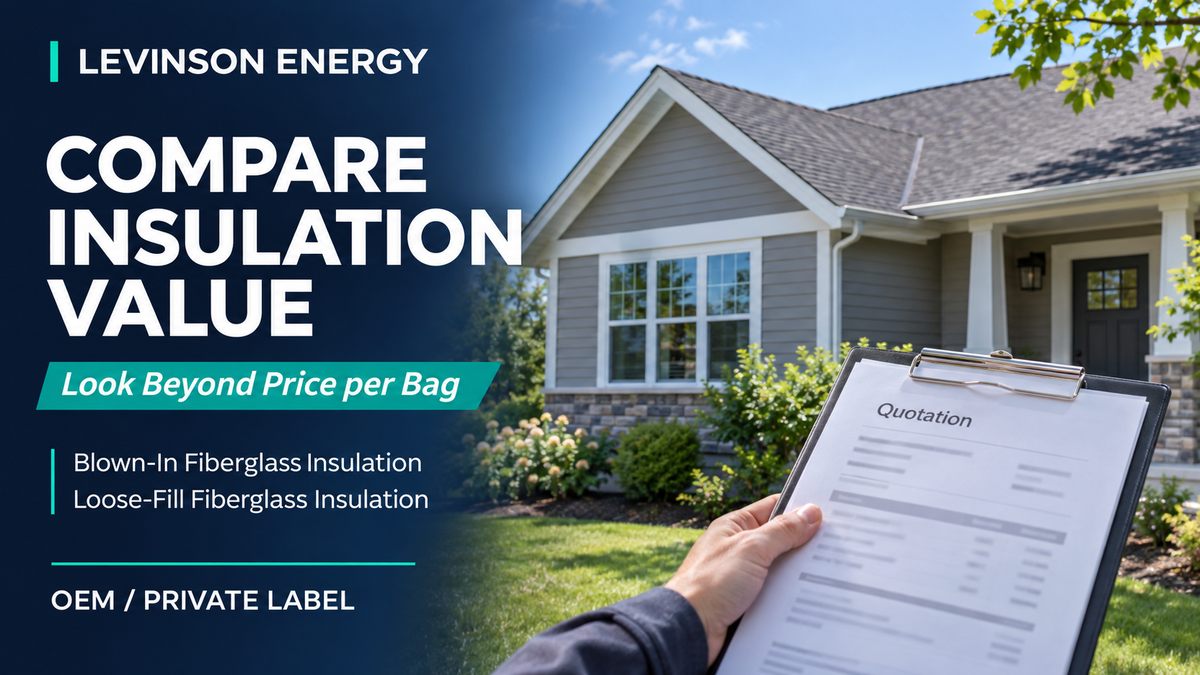
Blown-in fiberglass insulation is often quoted by the bag, but a bag price alone does not show the material cost of insulating an attic. Contractors and importers need to know how much documented coverage each product provides at the same target R-value. That comparison connects a purchase price to the thermal performance the project actually requires.
Bag weight is a useful starting point. A 33 lb / 15 kg package states the quantity of material being purchased, but equal-weight bags do not automatically provide equal coverage. Products can have different installation requirements. Dividing price by weight helps compare purchase cost per kilogram; it does not establish cost per insulated square foot.
For loose-fill fiberglass insulation, the coverage chart provides the next part of the calculation. Buyers should compare the listed coverage per bag, required thickness, and minimum material quantity for the chosen R-value and application. Comparing one product at R-30 with another at R-49 would produce a misleading cost comparison, even if both figures came from valid charts.
A straightforward calculation is to multiply the required number of whole bags by the price per bag, then divide by the project area. For illustration only, if an assumed project needs 12 bags at $25 each for 1,000 square feet, material cost is $300, or $0.30 per square foot. These invented figures are not Levinson Energy pricing, coverage data, or an R-value claim.
For imported blown-in fiberglass insulation, the calculation should use the cost delivered to the same destination. Freight, handling, applicable import charges, and inland delivery can change the result. A factory quotation and a delivered warehouse quotation need to be adjusted to the same cost basis before buyers compare them.
Contractors should then distinguish material cost from total installed cost. Machine compatibility, feeding behavior, and installation time influence project economics. A controlled trial of blown fiberglass insulation can help assess these practical factors, but a trial alone does not establish a tested R-value or replace product-specific coverage documentation.
Levinson Energy manufactures blown-in fiberglass insulation in 33 lb / 15 kg bags and supports OEM packaging and private-label cooperation. Importers, distributors, and contractors can share their intended application, order quantity, and destination when requesting a quotation. Discussing available technical documentation alongside samples helps buyers identify what is established and what still needs evaluation.
Levinson Export Inquiries
Full Name*
Country / Region*
Email*
Message*


